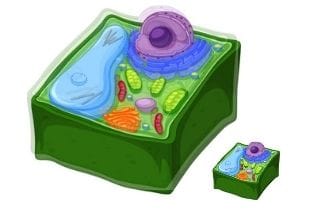
Plant Cell Development - Submit Special Issue
Guidance for submitting to PCD special issues.
Plant Cell Development - Submit Special Issue
Guidance for submitting to PCD special issues.
Prepare Your Submission
Confirm that your manuscript aligns with the special issue theme and includes required documentation.
Indicate the special issue title in your cover letter for proper routing.
Align submissions to the announced theme and reference it in your cover letter.
Explain how imaging parameters were calibrated for microscopy assays.
Clarify how developmental stages were defined and verified.
Report software versions and pipelines for bioinformatics analyses.
Describe quality assurance steps for phenotyping workflows.
Discuss limitations related to tissue specificity or developmental stage.
Include details on controls for stress or nutrient treatments.
Describe replicate structure and experimental randomization.
Describe any deviations from standard protocols and their impact.
Submission Workflow
Align Theme
Confirm the manuscript matches the special issue topic.
Submit
Upload files and note the theme in your cover letter.
Review
Peer review evaluates developmental methods and transparency.
Publish
Accepted papers are scheduled within the special issue collection.
Provide complete files and disclosures to avoid review delays.
Summaries connecting cellular mechanisms to crop outcomes strengthen impact.
Describe controls for hormone treatments and concentration gradients.
Describe batch effects and correction methods in imaging or sequencing data.
Explain how sample sizes were determined for developmental assays.
Clarify whether findings generalize across species or cultivars.
Document imaging time points and resolution settings.
Clarify cell cycle staging methods and validation.
Summarize implications for plant development and resilience research.
Quality Expectations
Submission Essentials
- Transparent developmental methods
- Clear reporting of data sources and limitations
- Explicit alignment to the special issue theme
Review Expectations
- Methodological rigor and reproducibility
- Compliance with ethics and data policies
- Actionable insights for practice
Clear reporting of cell lineage methods improves reproducibility across plant models.
Report statistical thresholds used for gene expression or omics analysis.
Provide uncertainty measures for key developmental outcomes.
Clarify temperature and light regimes for growth experiments.
Report statistical corrections for multiple testing in omics data.
Explain how missing data were handled in longitudinal growth studies.
Explain how phenotype scoring was validated.
Report how anatomical sections were prepared and stained.
Include key assumptions in developmental models.
Support
For submission questions, contact [email protected].
Document growth conditions and photoperiods to contextualize cellular responses.
Include details on sample preparation and tissue handling to avoid bias.
Explain how confounders were handled in observational plant studies.
Include references to standards or plant nomenclature guidance.
Provide a rationale for selected markers or reporter lines.
Report effect sizes relative to developmental benchmarks.
Provide context for translational relevance to crop improvement.
Explain how data quality checks were performed.
Report calibration routines for imaging devices.
Submit to a Special Issue
Contribute to focused collections that shape plant cell development.